Planting The Railway to Canada - An Interview with Soo Bing Jang and James Wong
Soo Bing Jang immigrates with her family to Canada in search of a better life, and meets James Wong, whose family has a history in the Canadian Railway. Together, they built a family that stays deeply connected to their heritage and identities as Chinese Canadians.
Life as a farmer in China
Soo’s migration story started in Canton, China. During the Cultural Revolution [1], the Communist regime stripped her family of all their property, leaving them to struggle as farmers. Because Soo’s grandparents were landlords, they were subjected to public humiliation, forced to wear hats, parade through town, and even kneel on rocks. Soo talks about the hardships her family faced under the Communist Regime.
“My grandmother had a very hard life,” Soo says. "She raised seven children on her own after my grandfather passed away. Food was scarce, and only later, when I heard my grandmother’s and parents’ stories, did I understand the hardships they endured.”
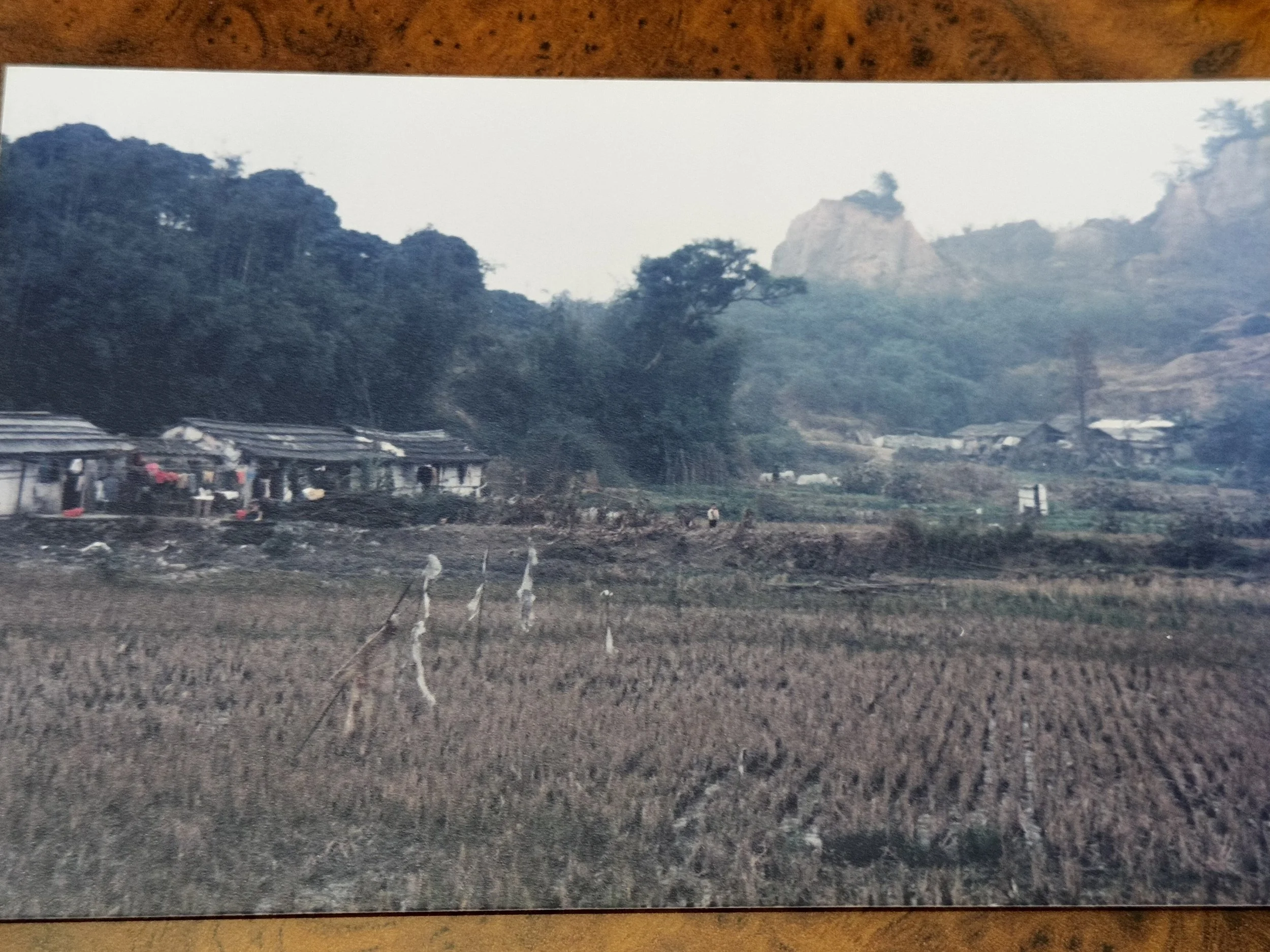
The farming fields of Canton, China
James’ family was close with Soo’s grandmother, and during this period they occasionally sent her money, which was vital to her survival.
As a child, Soo was unaware of how poor her family was, because everyone in her village was also a farmer. Daily tasks like feeding pigs and chickens, hauling water from the village well, and gathering sticks and twigs from the mountains for cooking fires were normalized in her life.
“We would also bathe and wash clothes in the local river or lake, even though it was filthy. It doesn’t sound pleasant, but because everyone did the same; it felt normal,” she says.
Education was rare and was a way to escape from the farming lifestyle. Soo recalls her family being proud of her academic achievements.
“I started school late — at age seven — but I did very well, often ranking among the top in my class,” Soo says. “That made my family proud, because they knew it was the only way to escape farming. Without it, you would remain a farmer your whole life”.
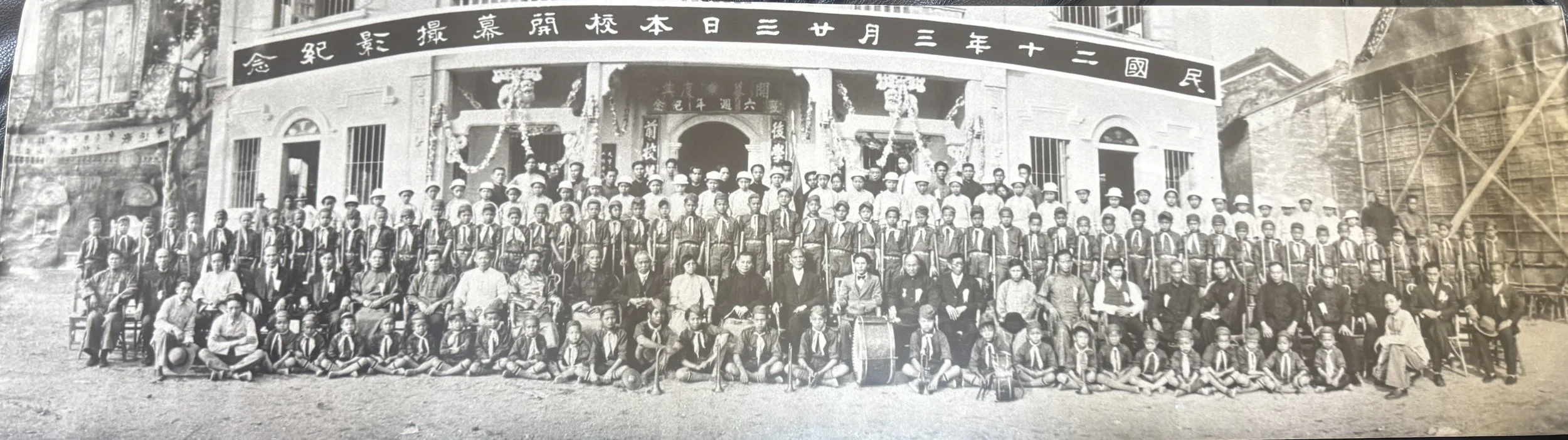
Soo’s elementary school in China.
The Railway and Grocery Business
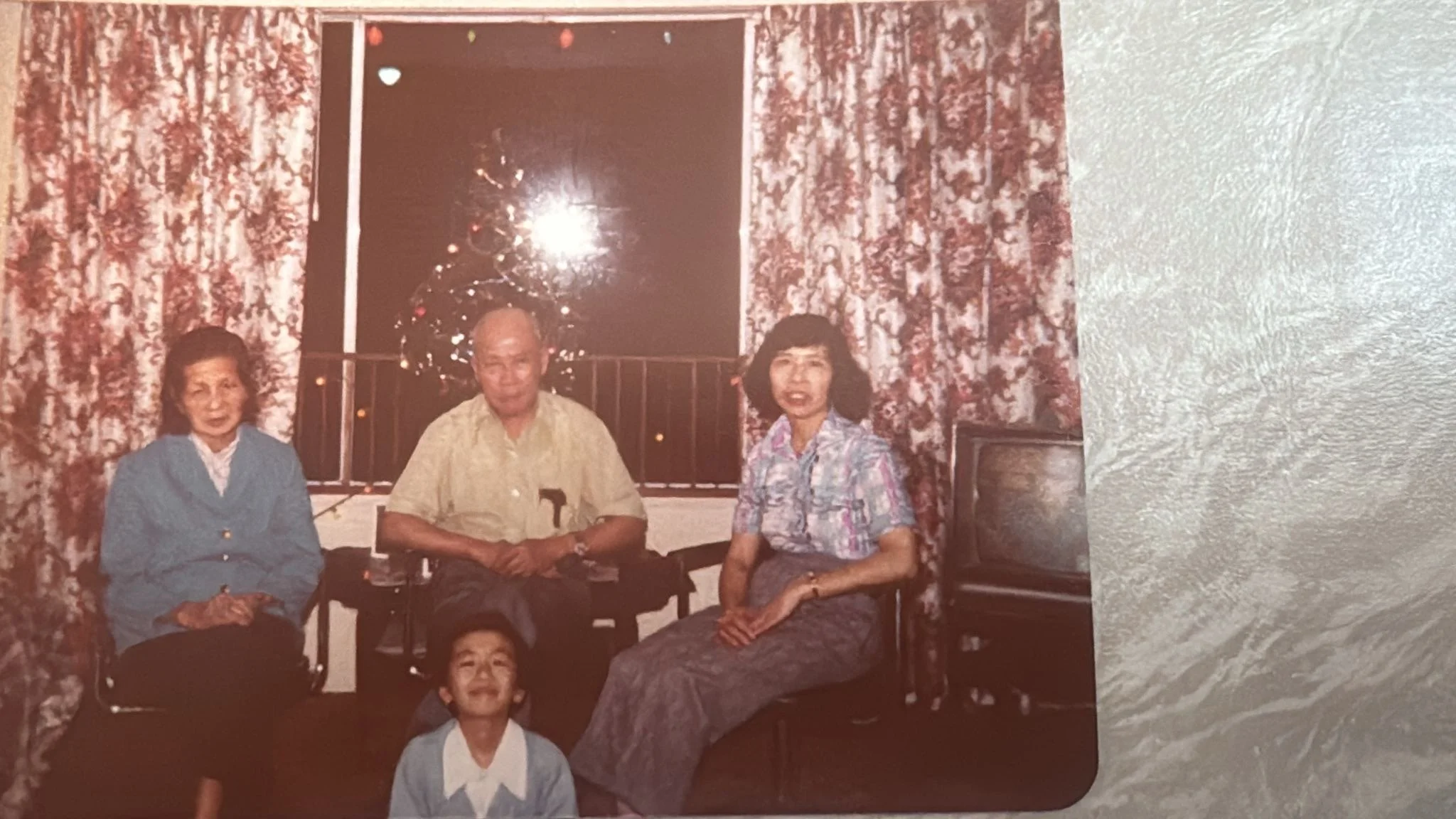
James’ grandparents; the sponsors of Soo’s family
James’ family migration story traces back to his great grandfather, who’s initial plan was not to immigrate to Canada, but to earn enough money to live more comfortably in China. Immigration was not appealing due to language barriers and cultural differences.
“He worked on the Canadian railway—the only opportunity for many Chinese people at the time,” James describes.
“Workers would get the head tax and supposed wealth that they had heard from stories of the gold rush [2]. Some people did manage to strike it rich; however, railway workers were being trafficked to this place.”
The railway work was extremely dangerous and according to James, it is estimated that three workers died for every mile of track built.
Realizing the risk, his great grandfather left the railway and started selling groceries from a horse-drawn cart, going door to door.
“Life was very hard for him and others in those days,” James said.
“The language barrier made it tough to communicate with customers, and he also faced daily racism because at the time Chinese people were concentrated in Chinatown.”
Despite the obstacles along the way, James’ great grandfather persevered, and eventually saved enough money to lease a storefront, then bought property, and built a business.
Immigration to Canada
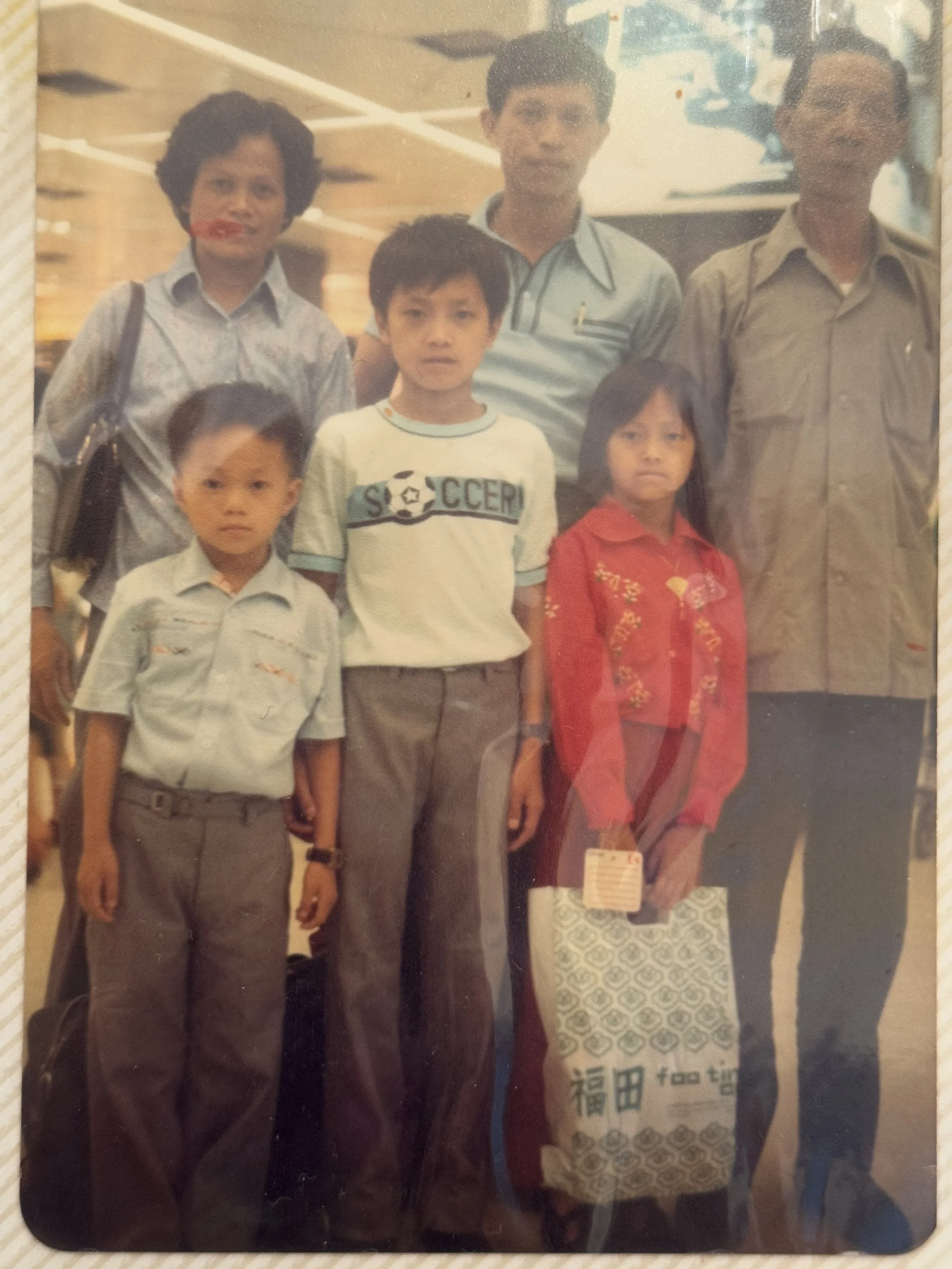
Soo and her family immigrating to Canada
In 1981, Soo along with her parents and two brothers immigrated to Vancouver, Canada. Their trip was sponsored by James’ family. Soo recalls how mind-blowing it was for her to even board a plane in the Hong Kong airport and own her first pair of shoes. When Soo arrived in Canada, she was amazed by the eclecticism and landscapes of the country, but what struck her the most were the simple things she was seeing for the first time. A toilet, a bathroom, and running water.
“I’ll never forget the first time I saw a toilet, a bathtub, and running water just steps away. It felt like heaven”, she remembers.
Soo’s family initially settled in the Wong’s basement. While Soo’s parents moved out five years later, Soo still lives in that same house with her husband, James. Because they lived in the same house, they grew close and did activities together like church, learning the violin, and Soo’s ESL homework.
English Second Language Enrollment
In the second week after arriving in Vancouver, Soo was enrolled in summer school and placed in ESL (English as a Second Language) so that she could learn English. She stills remembers the diversity of her classmates in her school bus.
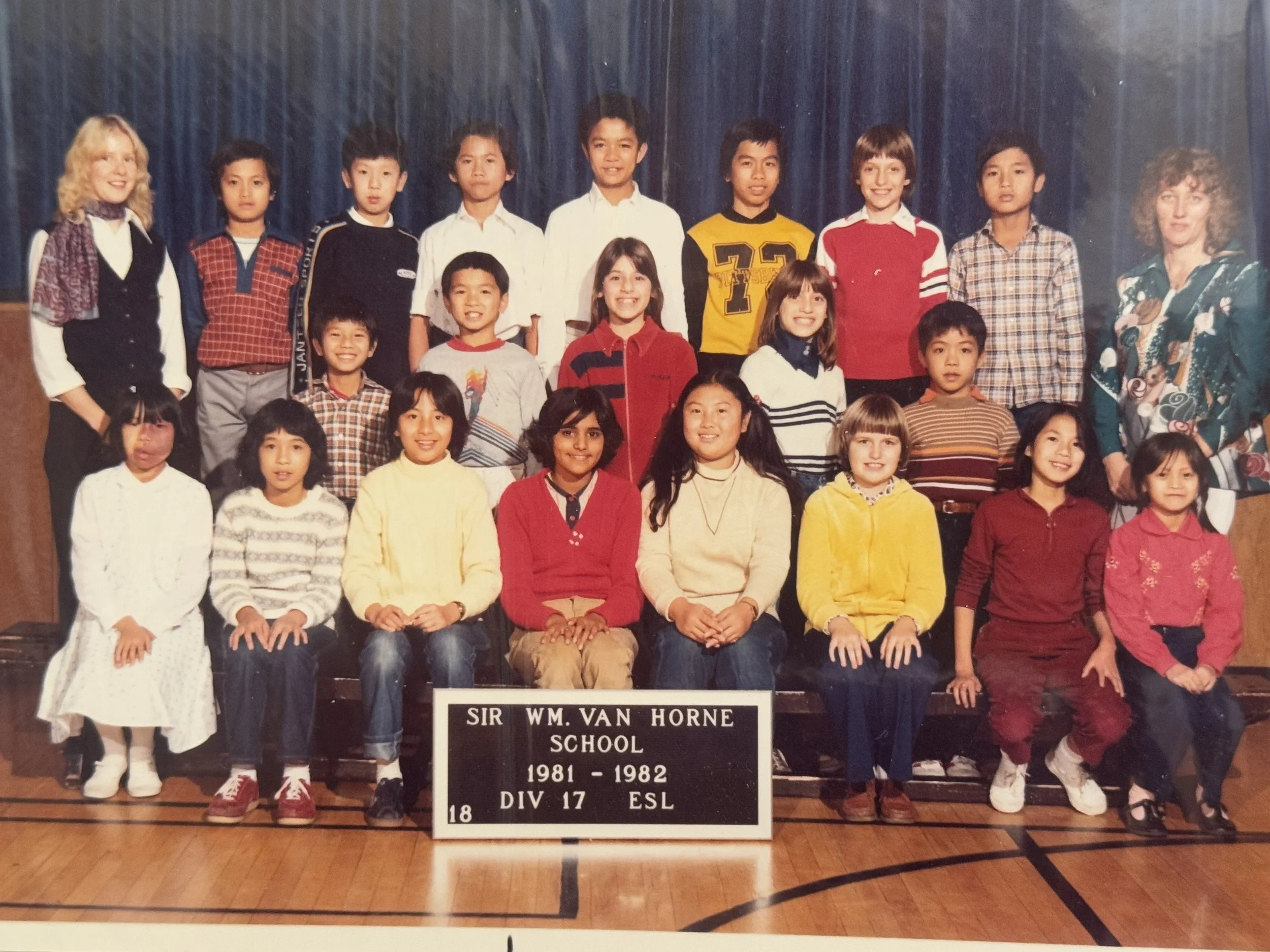
Soo in ESL Summer School and her ESL teacher on the far right.
“In the school bus is where I saw classmates of different races, colours, and cultures for the first time,” she reminisces.
“It was both exciting and overwhelming because none of us could communicate well—we all spoke different languages.”
Soo’s most formative mentor was her ESL teacher, who she still stays in touch with. She was her very first teacher in Canada and inspired her to become an educator because of her character.
“Coming from a Chinese background, where emotions aren’t always openly expressed, I wasn’t used to someone hugging us, encouraging us, and welcoming us with such kindness,” she remembers. “She made me feel welcome and at home right away.”
Cultural Shocks and Challenges
Adapting to cultural expectations around authority and education was difficult. Even after becoming fluent in English, she still struggled to make friends, but with time she accepted the fact that the people that love her for who she is will come her way.
There were moments of homesickness too. She missed her grandparents, uncles, and cousins back home. “In China, family life is close—you’re always surrounded by relatives, gatherings, noise, and laughter. In Canada, the houses and streets felt so quiet. Sometimes I felt very lonely,” she says.
A Helping Hand
Soo’s parents were committed to making a better life for themselves and for their children. Her mother worked as a dim sum waitress, and her father a baker, then a gardener. Eventually her parents started a landscaping business. They were determined to not only provide for their family in Canada but their family back in China as well.
James talks about the significance of unity in family even when you are living apart from them:
“Not everyone had the chance to come here,” James emphasizes.
“If one member of the family had the privilege to come here, then that person would make the money to support their own immediate family as well as family back in China.”
With time, Soo’s family was able to sponsor other relatives in China to immigrate to Canada and have a better life. Because of her family’s leap of faith, they were able to offer a helping hand to their extended family in China.
Traditions
Soo and her family are rooted in their traditions. They celebrate Chinese New Year [3], and the Mid-Autumn Festival [4], both holidays centered around the celebration of the harvest. Her mother now gardens as a hobby and Soo learns from her to stay connected to her heritage.
“My mother has always had a green thumb; she grows vegetables every year and shares them with family and neighbours. During COVID, I started gardening myself, learning from her. It’s become a family passion.”
Whether it is gardening or farming, to Soo it is a symbol of resilience, a reflection of the hard work her family put in to thrive in their new home.
“Farming helps us see our lives too,” Soo says.
“Coming from a poor background you learn to work hard and acquire the skills necessary to thrive in society. When it’s harvest time, that is the time to celebrate your hard work. It is a result of your dedication and effort.”
While James did not have the farming background, growing up he could sense his family’s mindset of survival, the determination to prosper.
Multiculturalism
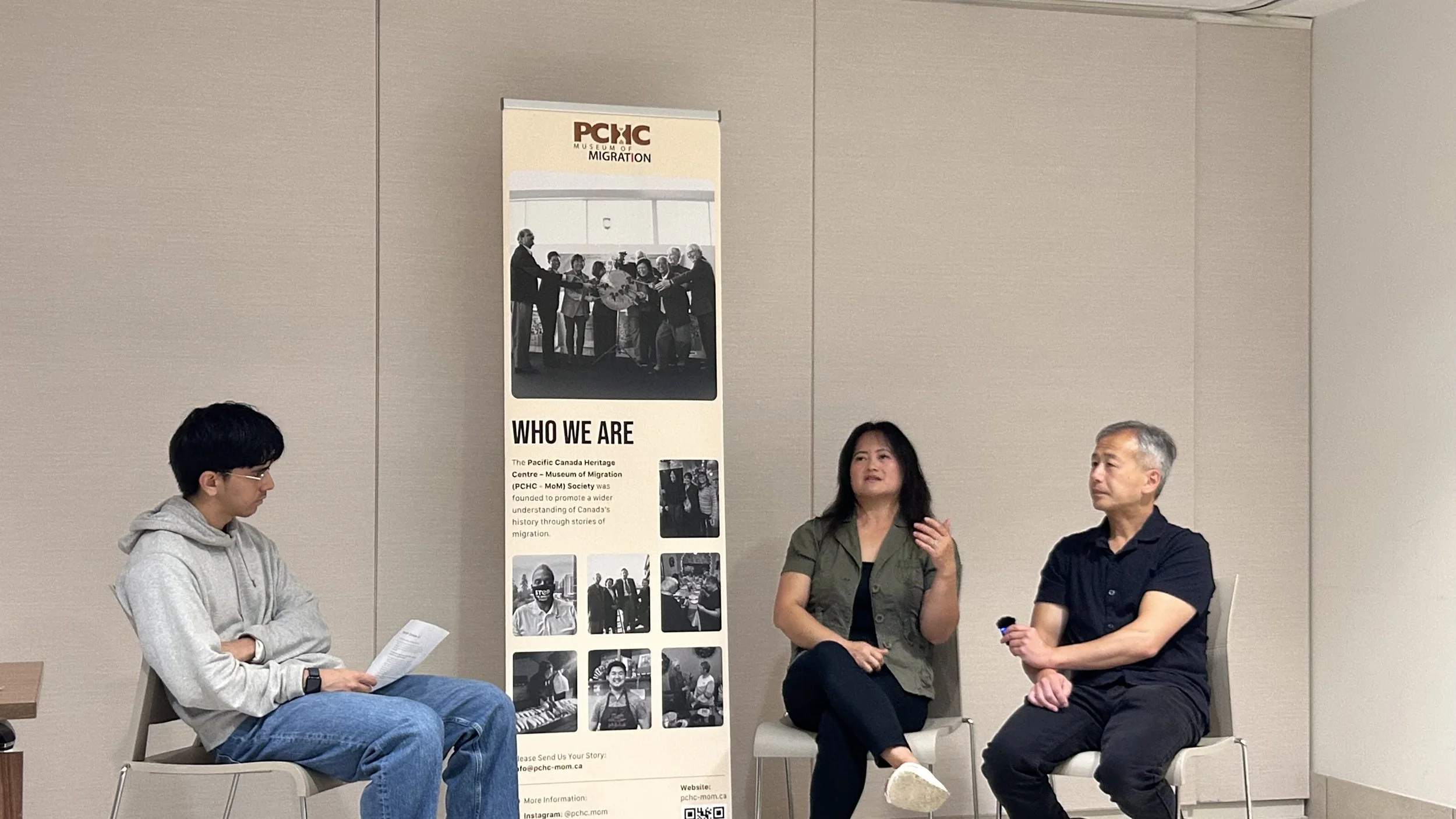
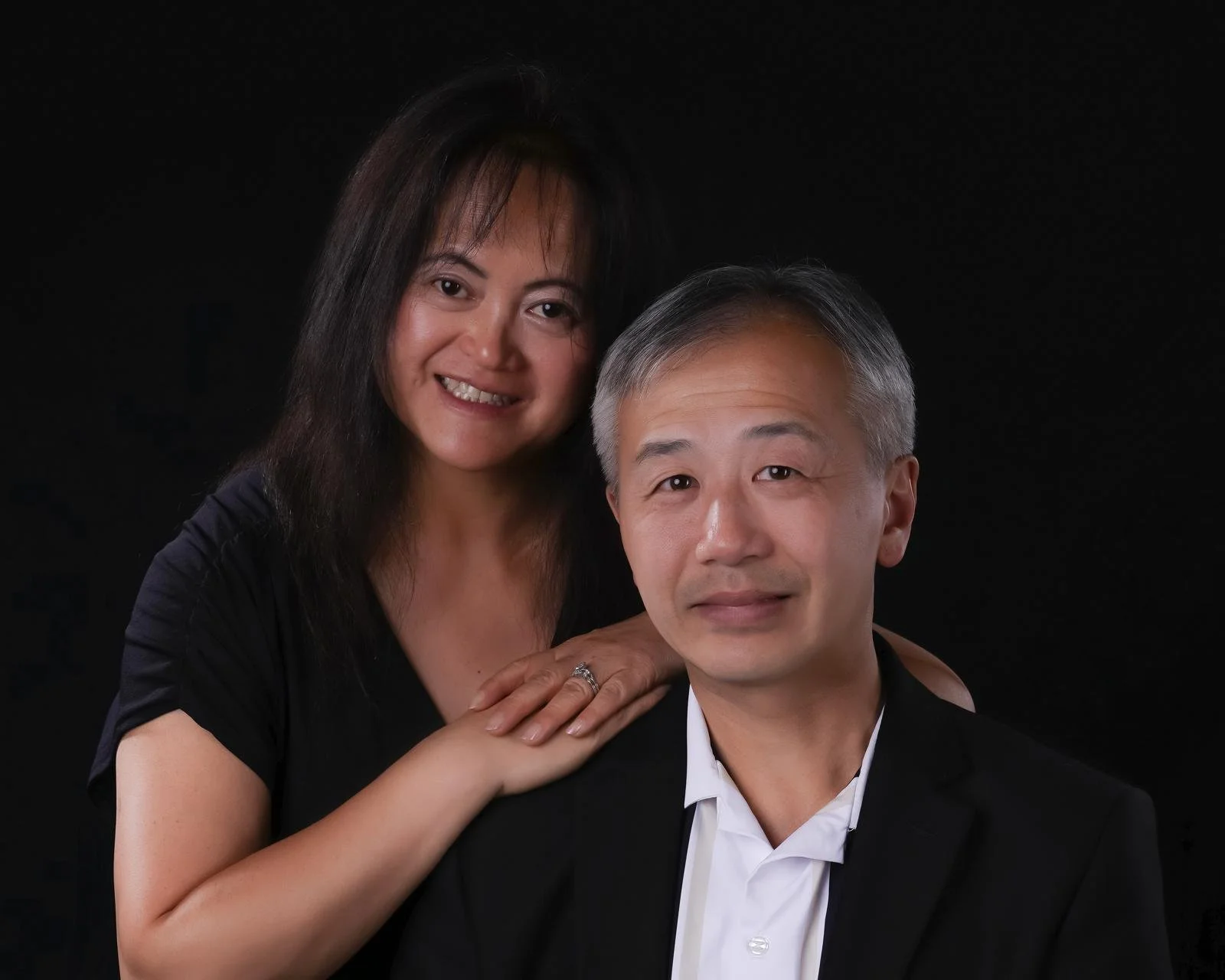
Soo Bing Jang and James Wong at their PCHC MoM Interview
Soo and James celebrate multiculturalism in Canada as a bridge between cultures and understanding.
“In the past couple decades, Canada has become truly multicultural,” James says. “You sense that people here are warmer and more welcoming compared to other places I have been to.”
Visiting China in 1995 deepened their understanding of their heritage.
“We went to our hometowns,” Soo remembers. “That educated us more about our culture and how the quality of life in China has evolved since we left.”
Being knowledgeable on your heritage makes you conscious about your role as an immigrant, and how you can help others through your life’s experiences.
Legacy and Reflection
Soo’s and James’ family migration stories are a testament to how one’s sacrifices are the foundation to building a better life for yourself. Through resilience and perseverance, Soo and James now have opportunities for their children in Canada because of the work their families put in to immigrate here.
When asked what message they want people to take from their migration story Soo says:
“Life is hard, but with determination, resilience, and a growth mindset, you can create a better future. I am grateful for my parents and my husband’s grandparents for providing us a path into Canada.”
James adds, “We witnessed how our families sacrificed everything for our future. So, we have that same mindset with our children. We make sure our decisions have a positive impact on the future generation.”
Works Cited
[1] The Cultural Revolution was a decade long political and social movement implemented by Mao Zedong that led to the death and persecution of millions of individuals who “took the capitalist road”.
[2] The Gold rush was a period in the mid-to-late 19th century where primarily along the West Coast of North America, an influx of gold was discovered, attracting people to flock to North America to hopefully strike it rich.
[3] Chinese Lunar new year is a significant holiday in Chinese culture, a time to celebrate the harvest and pray to the gods for abundant crops.
[4] The Mid-Autumn Festival is an East and South Asian holiday celebrated on the day with the brightest full moon of the year. It is a time to appreciate community, gratitude and praying.
Editors, HISTORY.com. Lunar New Year 2025. 28 May 2025. 27 August 2025.
history1917. The Cultural Revolution (1966–1976): An Overview. 14 June 2025. 25 August 2025.
Jaouhari, Emilie El. culture+. 19 September 2021. 27 August 2025.
Newell, Dianne. Gold Rushes in Canada. 27 May 2019. 27 August 2025.