The Art of Becoming: How Keiko Honda Reimagines Belonging Through Art and Community
There are places that shape us, and then there are places that continue to live within us, quietly and persistently guiding how we move through the world. For Keiko Honda, that feeling began in Kumamoto, Japan, surrounded by water, forests, and the quiet rhythms of rural life. When she speaks about those early years, there is a sense of immediacy, as if those memories are not distant but still lived.
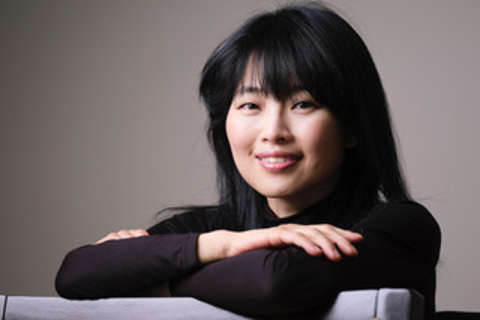
Keiko Honda, Ph.D., MPH
Founder & Executive Director I Vancouver Arts Colloquium Society
Instructor I Simon Fraser University
Author of Accidental Blooms (Caitlin Press, 2023), Hidden Flowers (Heritage House, 2025), The Broken Map Home (Caitlin Press, 2025), Words That Last (Caitlin Press, forthcoming 2026)
Keiko Honda’s reflections on identity, resilience, and belonging also extend into her published work. In her books - Accidental Blooms, Hidden Flowers, and The Broken Map Home - she explores migration, transformation, and the emotional landscapes that shape a life. These narratives are deeply informed by family memory and intergenerational influence, including the lasting presence of her grandfather, whose impact continues to echo through both her writing and her community work.
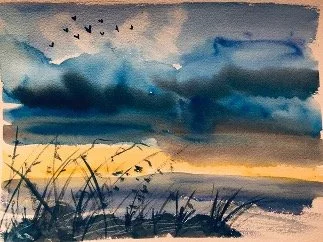
Figure 1. “Summer Breathing” by Keiko Honda.
As a child, she experienced nature not as something separate but as something shared. Insects, birds, earth, and water coexisted in a single, interconnected space, one where boundaries felt almost invisible. That early immersion would later become something more than memory; it would become a way of understanding the world.
“As an adult, sometimes you detach from nature…, but as I get older, I realize that going back to nature is really something I can connect with right away.”
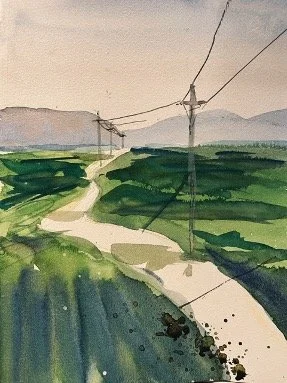
Figure 2. “Take Me Home” by Keiko Honda.
Equally formative was the environment within her home. Raised alongside her maternal grandparents, Keiko grew up surrounded by unconditional care, a sense of freedom, and a profound awareness of effort and responsibility.
“I was raised by my grandparents… I had so much freedom and unconditional love.”
Family life unfolded through shared experiences rather than structured events. A simple moment, like her grandfather catching a fish, could turn into a gathering. Food would appear, conversations would stretch, and children would play. These were not isolated traditions but a way of living, one that quietly taught her that belonging is created through presence, connection, and shared time.
Becoming Cosmopolitan
Leaving Japan in her mid-twenties did not mean leaving those values behind. Instead, they traveled with her, reshaped and tested in entirely new environments. She moved to New York City, stepping into a world that challenged every assumption about identity.
“When I moved to New York, it was really exhilarating… I immediately adopted that New Yorker mentality.”
There is a noticeable shift when she speaks about this period; her tone becomes more animated and her words more immediate, reflecting the impact the city had on her. New York, as she describes it, was a place where identity was no longer predictable or fixed, where every encounter had the power to disrupt expectations.
“Every single person you encounter, you will never guess what this person’s background is… I dropped the stereotype right away.”
Immersed in that environment, she began to see herself differently, not solely as Japanese but as something more fluid. This shift expanded her sense of self. Identity became something dynamic, shaped through interaction, movement, and exposure to difference.
And yet, even as she embraced this forward-looking perspective, her roots remained intact, not as nostalgia but as an anchor. Interestingly, distance also brought a new awareness of her own culture.
“I will be discovering the richness of my culture through the eyes of non-Japanese people.”
This broadened perspective would later shape not only how she understood herself, but also how she approached her professional work. Her academic and research path increasingly centered on social support networks, how human relationships influence health, resilience, and the conditions for people to flourish.
At the time, these ideas remained largely theoretical. Later, they would become a lived experience.
When Life Changes the Plan
New York offered momentum, intellectually, socially, and professionally. She was building a life in research, forming deep connections, and inhabiting a future that felt open and expansive. And then, unexpectedly, everything changed.
There is a subtle pause when she speaks about this transition, a sense of reflection in the way she chooses her words.
“If this didn’t happen… probably we wouldn’t leave New York. But life does not always happen as you planned.
At forty, she was diagnosed with transverse myelitis, a sudden spinal cord inflammation that left her a wheelchair user. What followed was not just a medical transition but a complete reorientation of life. She decided to leave New York and move to Vancouver, seeking a slower pace, proximity to nature, and a supportive environment for raising her young daughter.
“Looking back, I’m really glad that we made that decision… although, largely, that was my decision.”
What carried her through this shift was not independence alone but something she had long studied and now had to live. Her resilience and support networks helped her overcome those circumstances. The concept she once explored through research became something deeply personal, something she experienced from within rather than observed from a distance.
Reimagining Through Community:
Arriving in Vancouver, she encountered a different rhythm of life, quieter, more structured, and at times more difficult to penetrate socially. Opportunities for spontaneous connection were less visible than in New York.
Yet instead of waiting for a community to appear, she began to create it. Drawing from both her lived experience and her background in public health, she understood something essential: community is not something we passively inhabit, it is something we actively build.
When she speaks about this work, there is a shift in tone, more deliberate, more thoughtful. It reflects the importance she places on what she is building. Relationships, for her, became the starting point. Not formal structures. Not institutions. But a genuine human connection.
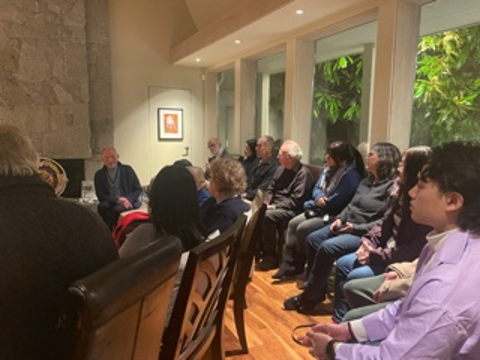
From this vision, she began inviting neighbors, artists, and even strangers into her home; offering a space where ideas, stories, and creative work could breathe. What started as informal gatherings soon evolved into a long-running salon series since 2010 – the Artists in Residence (AIR) Salon, fostering intergenerational dialogue and artistic collaboration.
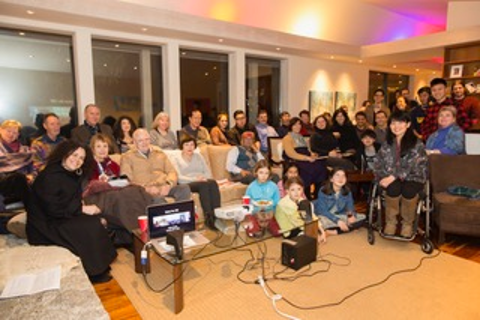
Figure 3. AIR Salon Series.
Becoming an Artist
And yet, perhaps the most unexpected transformation was still to come.
For much of her life, she had not considered herself an artist. Her identity had been rooted in science, research, and academia. That changed through a single, seemingly small moment when someone saw something in her that she had not yet seen in herself.
“We are all artists.”
What began as hesitation gradually became exploration. Through storytelling, writing, and collaborative creation, she discovered a new way of understanding both herself and the world around her.
Art, she realized, was not separate from her scientific work; it was an extension of it. Where science sought patterns through data, art revealed them through lived experience. Her focus shifted from observing systems to participating in them, from analyzing human connections to actively cultivating them.
A Living Definition of Belonging
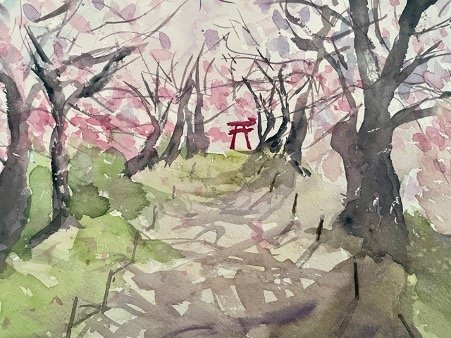
Figure 4. “Ichi-go Ichi-e" by Keiko Honda.
Today, after decades of movement across cultures, disciplines, and identities, Keiko resists the confinement of labels.
She does not see herself as belonging to a single place, nor does she identify strictly within generational categories. Instead, she embodies something more fluid, a lived expression of hybridity.
For her, belonging is no longer a fixed coordinate on a map or a static identity; it is a dynamic state of being. It emerges in moments of connection, through shared experiences, and in the willingness to remain open to others and to change. It can be found in conversations with strangers, in acts of creative collaboration, and in the quiet recognition of something familiar within difference.
Her journey, from the rice paddies of Kumamoto to the streets of New York and into the community spaces she built in Vancouver, is not a story of leaving one identity behind to adopt another.
It is a story of integration. Of returning, again and again, to what connects us. Identity is not something we arrive at, but a landscape we continue to shape. An ongoing process. A practice. A lifelong art of becoming.
“Accidental Blooms asked how you survive the life that happened to you. Hidden Flowers asked what blooms in you when the old definitions no longer hold. Words That Last, forthcoming this fall, goes deeper than both — what do you do with what remains? It's the book I didn't know the first two were preparing me to write.
And then there's The Broken Map Home — my translation of my late grandfather's wartime memoir, the book that sits outside the series and somehow underlies all of it. Translating him was the hardest thing I've done as a writer. Not because of the old Japanese language — though that was difficult enough. But because I had to resist the urge to fill in, to explain, to smooth the strangeness into something more accessible. His fragments needed to remain broken. His silences needed to stay silent.
What I found, working with his words, was that my grandfather had already taught me the thing I'd spent decades trying to learn: that the practice of noticing — carefully, precisely, without agenda — is itself a form of bearing witness. Not analysis. Not data. Something older. The act of a person saying: I was here. This is what I saw. It mattered.
That is what all four books are. In different seasons, from different thresholds, with different losses and discoveries. The same gesture — across one family, three generations, a century of difficulty and beauty and ordinary days.”